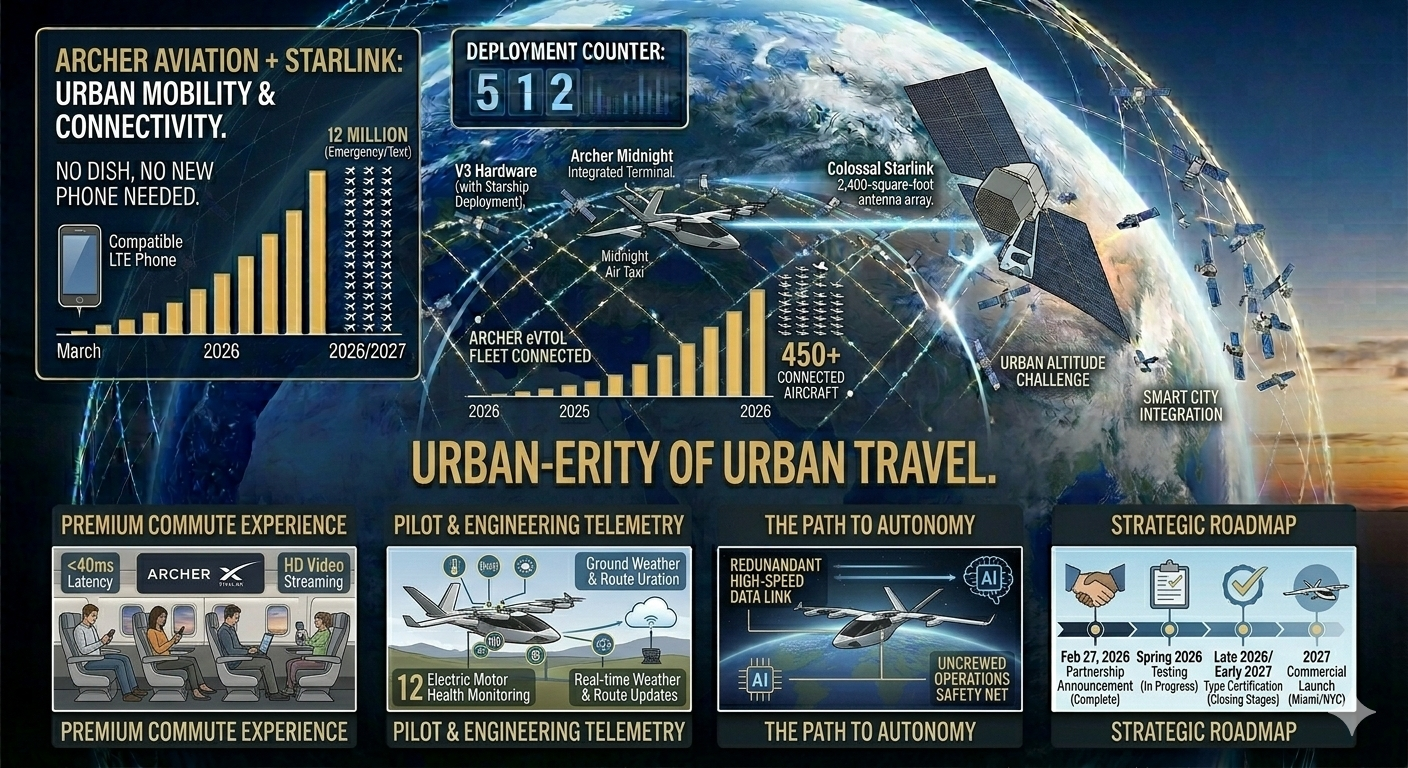
As of january 13, 2026, SpaceX has capped off a historic month for rocket reusability. On Friday, February 27, 2026, at 7:16 a.m. ET, a veteran Falcon 9 booster took to the skies from Space Launch Complex 40 (SLC-40) at Cape Canaveral, marking a monumental 30th flight for a single first-stage booster.+1
This mission successfully deployed 29 Starlink v2 Mini satellites into low-Earth orbit, pushing the total number of Starlink satellites launched in 2026 past 500 and inching the active constellation ever closer to the 10,000-satellite milestone.
The 30-Flight Milestone: Redefining “Veteran”
The booster supporting this mission has become a symbol of SpaceX’s rapid industrialization of space. With its 30th successful launch and landing, it joins an elite tier of hardware that has fundamentally changed the economics of orbit.
- Booster History: This specific first stage has a resume that includes CRS-24, Eutelsat HOTBIRD 13-F, OneWeb 1, SES-18/19, and a staggering 26 dedicated Starlink missions.
- The Landing: Approximately 8.5 minutes after liftoff, the booster performed a flawless return, landing on the droneship A Shortfall of Gravitas stationed in the Atlantic Ocean.
- Turnaround Efficiency: The ability to certify and fly boosters 30+ times is the “secret sauce” behind the 512 satellites SpaceX has already placed in orbit in just the first two months of 2026.
February 2026: The Month in Review
SpaceX concluded February with a flurry of activity, launching 83 satellites across three missions in the final week alone.
| Date | Mission | Booster Flight | Satellite Count | Launch Site |
| Feb 21 | Starlink 6-104 | 33rd Flight (B1067) | 28 | Cape Canaveral |
| Feb 25 | Starlink 17-26 | 11th Flight | 25 | Vandenberg |
| Feb 27 | Starlink 6-108 | 30th Flight | 29 | Cape Canaveral |
The Starlink 10K Countdown
With the successful deployment of these 29 satellites, the Starlink mega-constellation is now estimated to have over 9,850 active satellites. At the current “warp speed” cadence, SpaceX is on track to cross the 10,000-satellite threshold within the first week of March 2026.
What This Means for Global Connectivity
The “Gigabit Horizon” is built on this very reusability. By launching batches of 29 satellites every few days using “30-flight veterans,” SpaceX is able to:
- Saturate Mid-Band Capacity: Ensuring 200+ Mbps is the floor, not the ceiling, for residential users.
- Bolster Direct-to-Cell: Adding the necessary “nodes” to support the 150 Mbps smartphone target for late 2027.
- Ensure Reliability: A denser mesh means more routing options for the inter-satellite laser links, reducing latency to fiber-competitive levels.