As of January 8, 2026, the digital divide is no longer being bridged—it is being dismantled. SpaceX has officially pushed the Starlink constellation past the 10,000-satellite milestone, marking a transition from a “service of last resort” to a dominant, high-speed orbital utility.
Here are the three core pillars of the 2026 Starlink Revolution.
Page 1: The 10K Dashboard — Global Density & Capacity
Focus: Scale and Constellation Health
The successful Starlink 17-26 mission on February 25th pushed the active count past 10,000. For the first time, “orbital density” has reached a level where waitlists are a thing of the past.
| Metric | Status (Feb 2026) | Significance |
| Active Satellites | 10,000+ | Global “always-on” coverage. |
| Operational Goal | 12,000 (Initial) / 30,000 (Target) | Path to 1 Gbps standard speeds. |
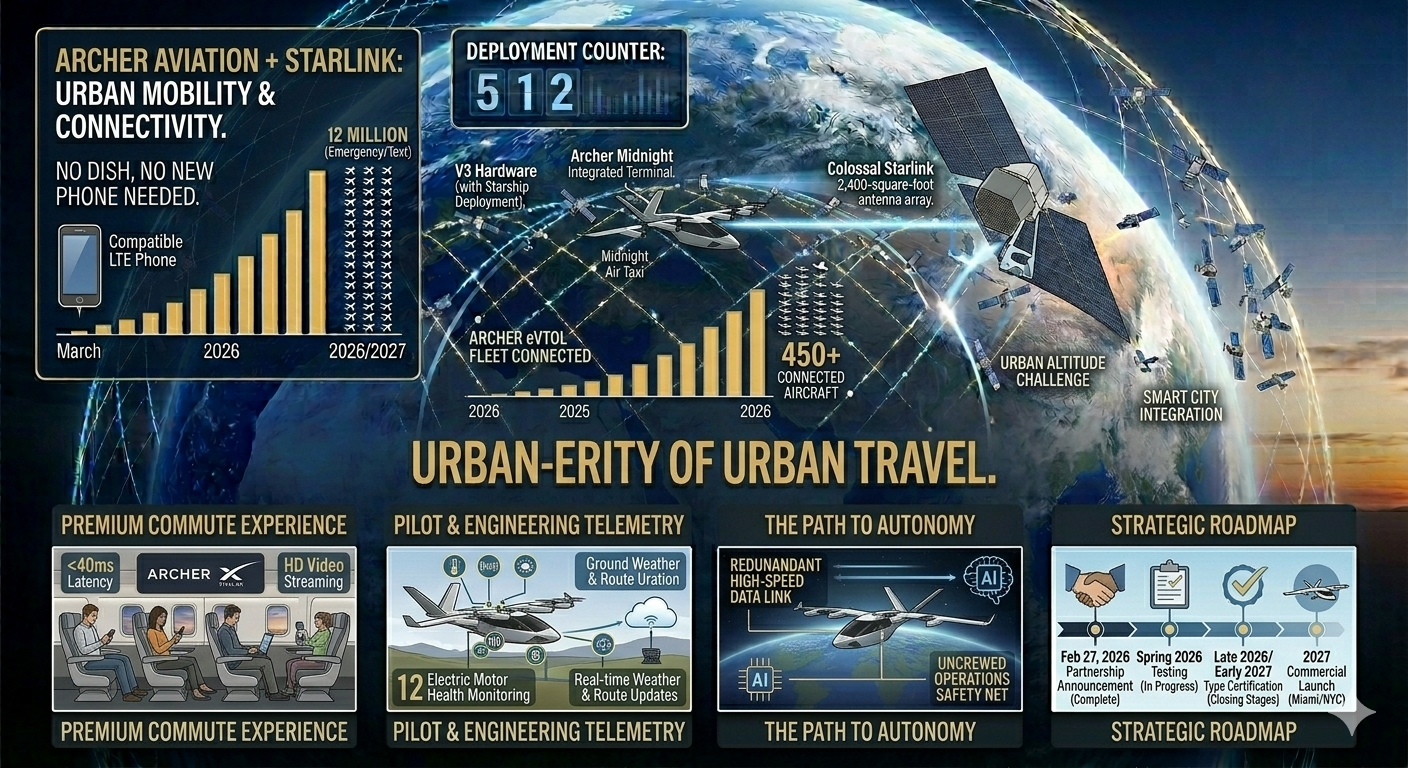
| 2026 Launch Pace | 512 Satellites YTD | Launching more than the rest of the world combined. |
| Orbital Altitude | 480km Shift | Lowering 4,400 units to improve signal and sustainability. |
Analyst Note: The shift to a lower 480km orbit ensures that any decommissioned satellite will burn up in the atmosphere within months, not years, setting a new standard for orbital sustainability.
Page 2: The 150Mbps Mobile Frontier
Focus: Direct-to-Cell and the EchoStar Paradigm
The most disruptive news of the month is the 150Mbps performance target for standard smartphones. Speaking at the ITU Space Connect conference, SpaceX’s Udrivolf Pica confirmed that Starlink is targeting 5G-equivalent speeds directly to your pocket by late 2027.
- The $17 Billion Spectrum Deal: By finalizing the acquisition of EchoStar’s AWS-4 and H-Block licenses, SpaceX now owns 50MHz of dedicated mid-band spectrum. This moves Starlink from a “guest” on carrier networks to a primary “cell tower in space.”
- The V3 Powerhouse: Deploying via Starship, the V3 satellites feature massive 2,400-square-foot antennas. These are powerful enough to deliver high-speed data to the unmodified phone you are holding right now.
- VLEO Expansion: SpaceX has filed for 15,000 additional satellites at Very Low Earth Orbit (330km) to further reduce latency and maximize signal for mobile users.
Page 3: Sky Mobility — Aviation & Air Taxis
Focus: The Archer Aviation Partnership and Commercial Rollout
Connectivity is now “gate-to-gate.” In late February 2026, the aviation industry reached a tipping point as Starlink became the default standard for everything from transcontinental jets to urban air taxis.
- The Archer Aviation Deal: On February 27, 2026, Archer Aviation announced a partnership to install Starlink on its Midnight electric air taxis. This ensures that as passengers zip across cities in 5–15 minutes, they maintain a seamless, high-speed 4K connection.
- Commercial Dominance: * United & Lufthansa: Both are currently mid-rollout, aiming to equip over 1,100 aircraft combined.
- British Airways: Launching its first Starlink-equipped long-haul flights in March 2026.
- ZIPAIR Tokyo: Became the first airline in Asia to achieve 100% Starlink fleet coverage this month.